
Program Educational Objectives are broad statements that describe the career and professional accomplishments that the program is preparing graduates to achieve
The graduates of Agricultural Engineers after 3 to 5 years will be.
PEO1: Core Competency: Successful professional with core competency and inter-disciplinary skills to satisfy the Industrial needs.
PEO2: Research, Innovation and Life-long Learning: Capable of identifying technological requirements for the society and providing innovative solutions to real time problems.
PEO3: Ethics, Human values, and Entrepreneurship: Able to demonstrate ethical practices and managerial skills through continuous learning.
Program Outcomes are statements that describe what students are expected to know and be able to do upon graduating from the program. These relate to the skills, knowledge, attitude and behaviour that students acquire through the program.
PO1 : Engineering Knowledge: Apply knowledge of mathematics, natural science, computing, engineering fundamentals and an engineering specialization as specified in WK1 to WK4 respectively to develop to the solution of complex engineering problems.
PO2 : Problem Analysis : Identify, formulate, review research literature and analyze complex engineering problems reaching substantiated conclusions with consideration for sustainable development. (WK1 to WK4)
PO3 : Design/ Development of Solutions : Design creative solutions for complex engineering problems and design/develop systems/components/processes to meet identified needs with consideration for the public health and safety, wholelife cost, net zero carbon, culture, society and environment as required. (WK5)
PO4 : Conduct Investigations of Complex Problems : Conduct investigations of complex engineering problems using researchbased knowledge including design of experiments, modelling, analysis & interpretation of data to provide valid conclusions. (WK8)
PO5 : Engineering Tool Usage : Create, select and apply appropriate techniques, resources and modern engineering & IT tools, including prediction and modelling recognizing their limitations to solve complex engineering problems. (WK2 and WK6)
PO6 : The Engineer and The World : Analyze and evaluate societal and environmental aspects while solving complex engineering problems for its impact on sustainability with reference to economy, health, safety, legal framework, culture and environment. (WK1, WK5, and WK7)
PO7 : Ethics : Apply ethical principles and commit to professional ethics, human values, diversity and inclusion; adhere to national & international laws. (WK9)
PO8 : Individual and Collaborative Team work : Function effectively as an individual, and as a member or leader in diverse/multi-disciplinary teams.
PO9 : Communication : Communicate effectively and inclusively within the engineering community and society at large, such as being able to comprehend and write effective reports and design documentation, make effective presentations considering cultural, language, and learning differences.
PO10 : Project Management and Finance : Apply knowledge and understanding of engineering management principles and economic decision-making and apply these to one’s own work, as a member and leader in a team, and to manage projects and in multidisciplinary environments.
PO11 : Life-Long Learning : Recognize the need for, and have the preparation and ability for i) independent and life-long learning ii) adaptability to new and emerging technologies and iii) critical thinking in the broadest context of technological change. (WK8)
Program Specific Outcomes (PSOs) refer to the specific abilities, knowledge, skills, and attributes that graduates are expected to possess upon completing a particular academic program or course of study
The students of Agricultural Engineering will be able to
PSO1: Design, analyze and apply the knowledge gained on agricultural machinery, tools, implements and production technologies to increase crop production, improve land use, soil nutrient and conserve resources like water, fertilizer, and energy.
PSO2: Apply the comprehensive knowledge of engineering properties of agricultural products for upgrading the unit operation and developing innovative process, value-added products, and advanced engineering technologies to meet the challenges in agriculture

| S.no | Name of the MoU Company | MoU Signed Date | No. of Year Valid | Name of the Activity | PO/ PSO |
|---|---|---|---|---|---|
| 1 | Sai Irrigation Erode |
30.09.2023 | 5 | Workshops, Local Visit | PO1, PO2, PO3, PO4 PO5, PO8, PO9, PO10 |
| 2 | Mobitech Wireless Solutions pvt ltd Erode |
31.07.2023 | 5 | Internship, Placement, Local Visit | PO1, PO2, PO3, PO4, PO5, PO9, PO10, PO11 |
| 3 | Universal Power Supplies Bangalore |
24.11.2022 | 5 | Internship, Placement, Local Visit, Guest Lecture | PO1, PO2, PO3, PO5, PO9, PO10 |
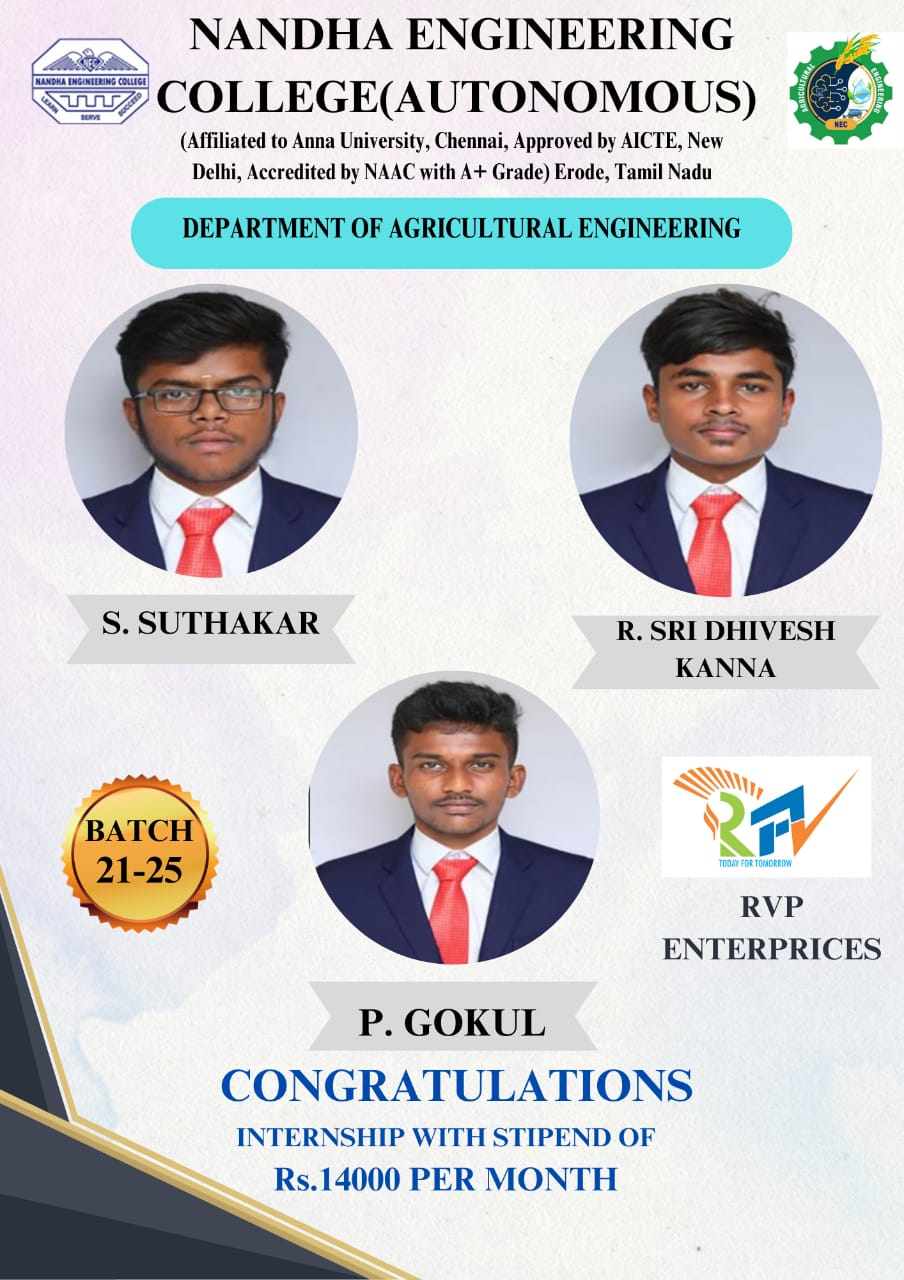
| 4 | Roots Irrigation Private Ltd, Coimbatore |
13.01.2022 | 5 | Internship, Placement | PO1, PO2, PO3, PO5, PO9, PO10 |
| 5 | Escorts Training and Development Centre, Bangalore |
14.02.2020 | 5 | Internship, Placement | PO1, PO2, PO3, PO5, PO9, PO10 |
| No. | Reference No. | Client Name | Address | Project Domain | Project Estimation | Cost of the Project | Project Coordinators | Project Start Date | Project Completion Date |
| 1 | 2024/25/Agri/Consultancy/01 | M/S S.K.Constructions | Sathyamangalam,Erode | Soil and Water Conservation | 62250 | 62250 | D.Ambika R.Sridharshini S.Vanisha | 20.02.25 | 20.02.25 |
| 2 | 2024/25/Agri/Consultancy/02 | Junior Engineer Anthiyur Town Panchayat Erode | Anthiyur Erode | Third Party Inspection-Material testing | 15000 | 15000 | Dr.E.K.Mohanraj Mr.K.L.Ravishankar Mr.K.Pradeep Kumar | 24.02.2025 | 28.02.2025 |
| Research and Development | |||||||||
| Ongoing Research Projects | |||||||||
| S.no | Reference no | Faculty Name | Project Title | Funding Agency | Seed Money Received (Amount) | Project Start Date | Project Completion Date(Tentative) | ||
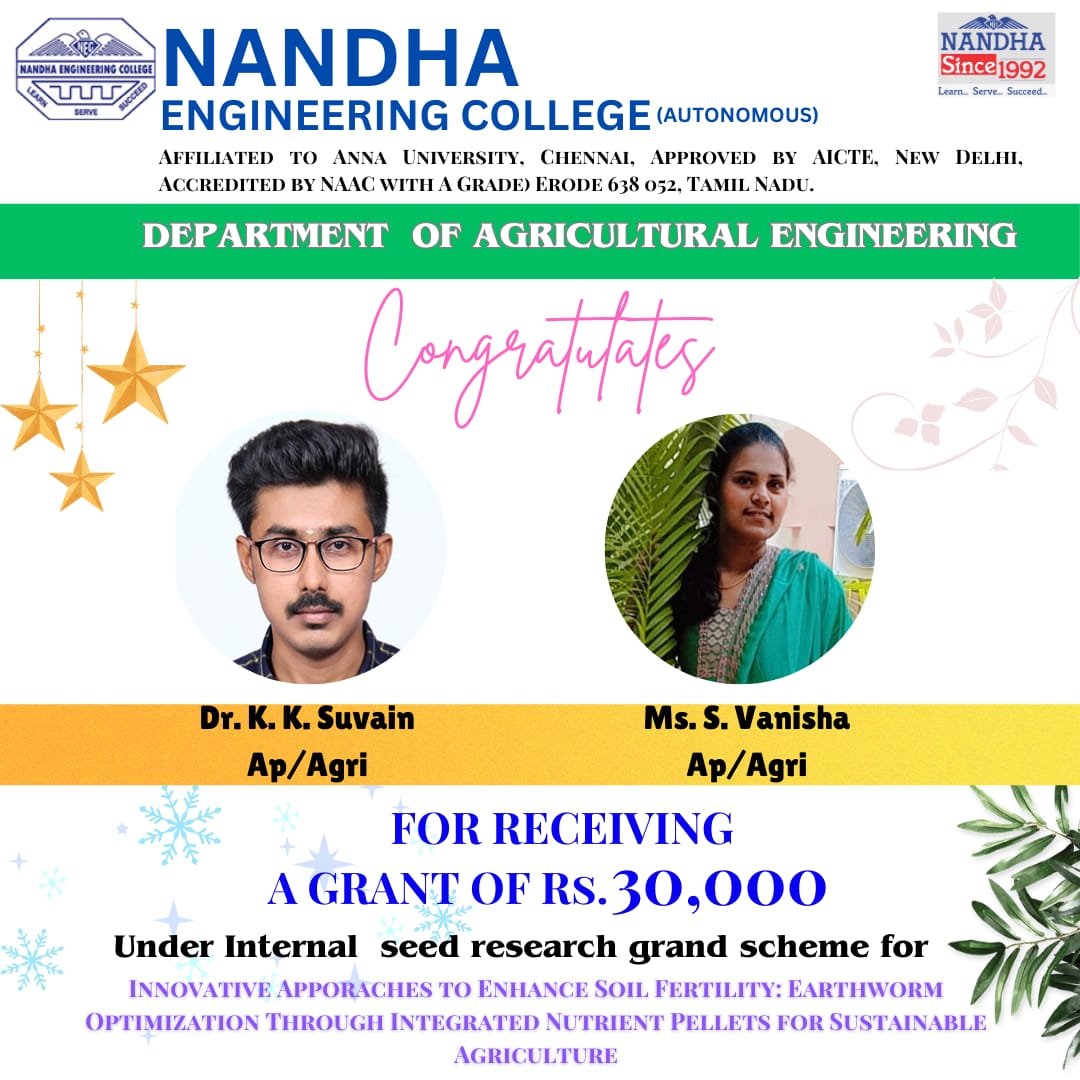
| 1 | NEC/R&D/CFIR/2024-25/Seed Grant/Project 2 | Dr. Suvain K. K., Dr. T. Jayanalina, Ms. S. Vanisha | Innovative Approaches to Enhance Soil Fertility: Earthworm Optimization through Integrated Nutrient pellets for Sustainable Agriculture | Nandha Engineering College | 30,000/- | 01.02.2025 | 28.05.2026 | ||
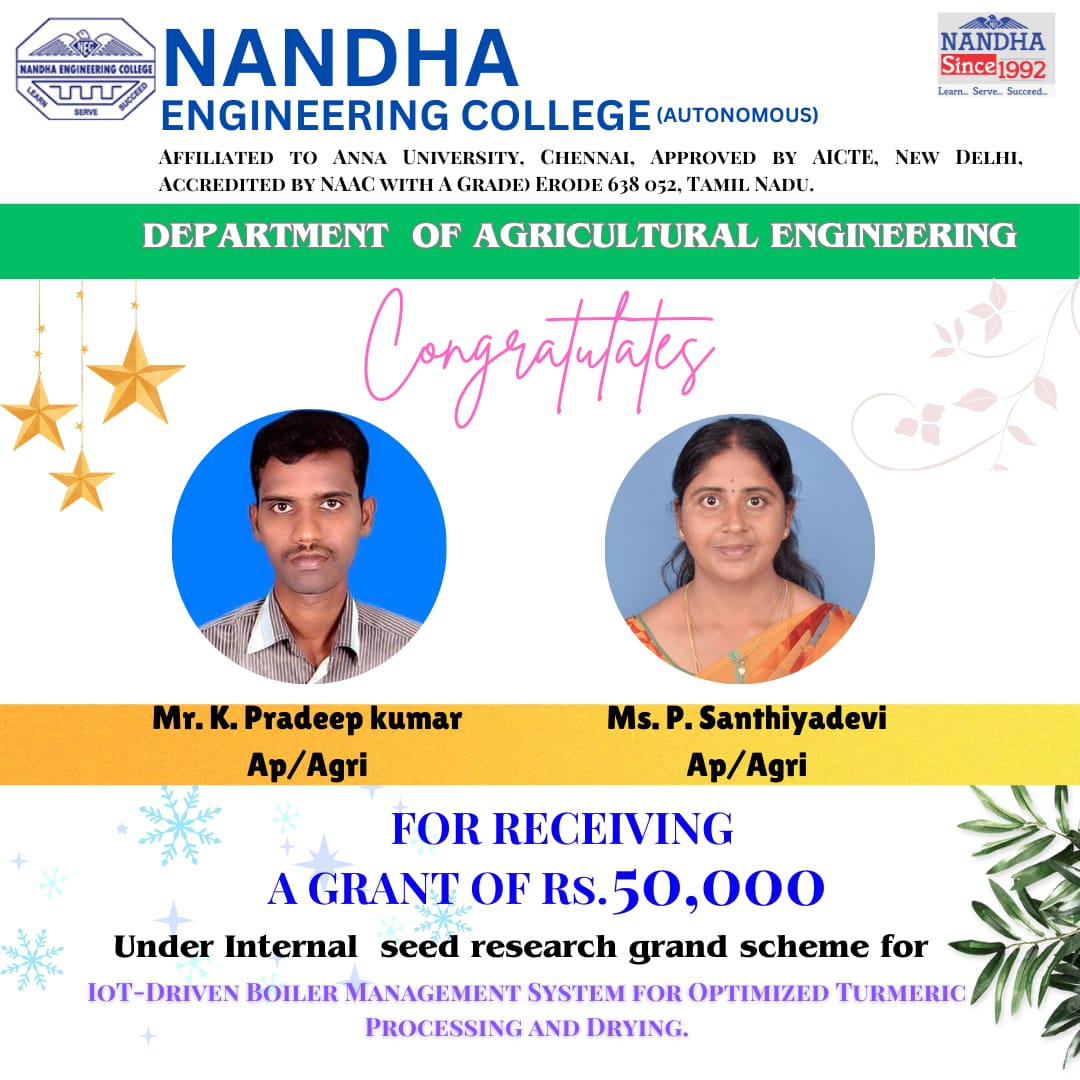
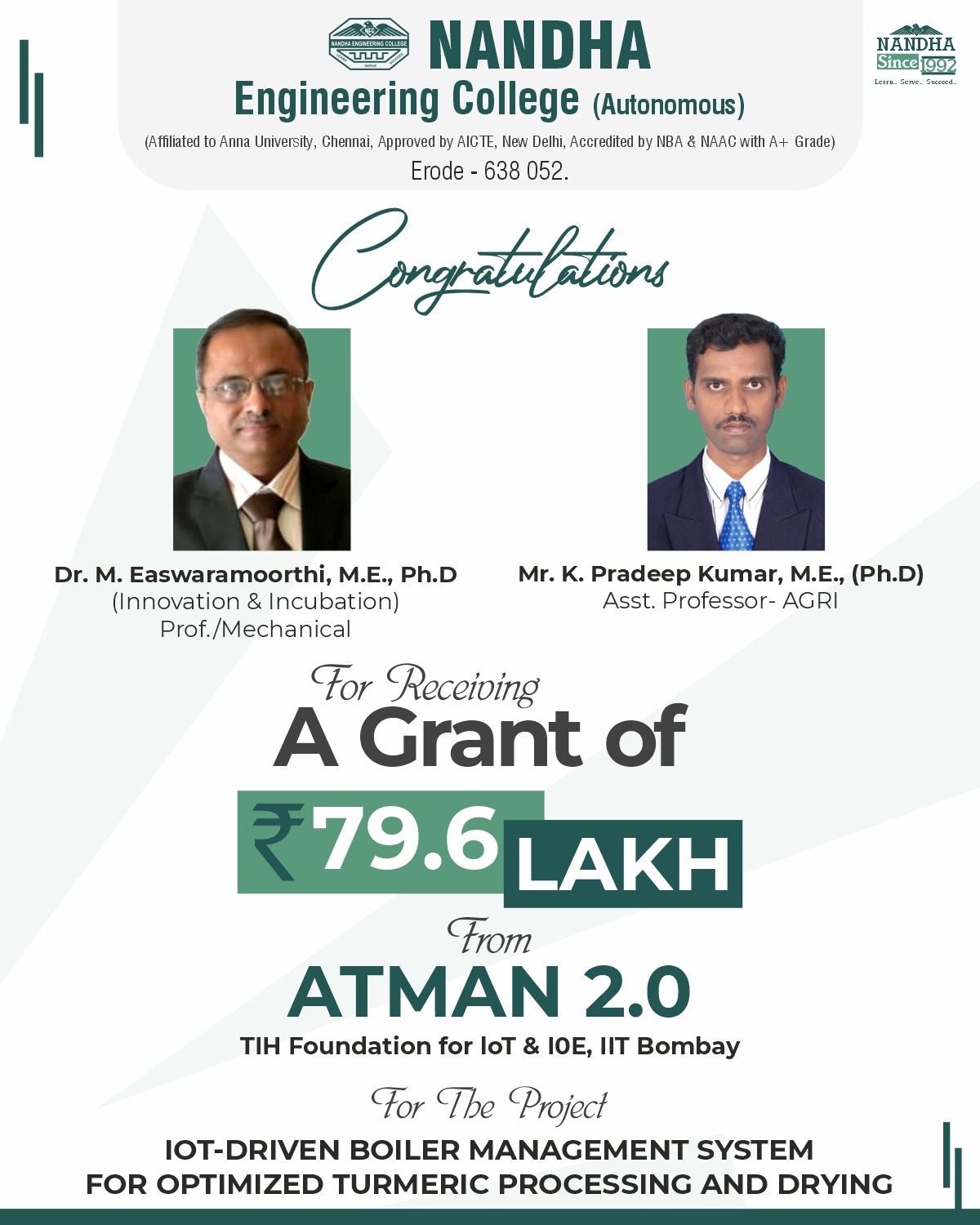
| 2 | NEC/R&D/CFIR/2024-25/SEED Grand/ Project 09 | Dr. M. Easwaramoorthi Mr. K. Pradeep Kumar Ms. P. Sandhiyadevi | IoT-Driven Boiler Management System for Optimized Turmeric Processing and Drying | Nandha Engineering College | 50,000/- | 19.12.2024 | 05.01.2025 | ||
| 3 | NEC/R&D/CFIR/2024-25/SEED Grand/phase -2 / Project 02 | Mr. K. Pradeep Kumar Ms. P. Sandhiyadevi | In-Situ monitoring of high-quality biochar formation with optimized thermal degradation biomass in automated bioreactors for small scale jaggary production unit | Nandha Engineering College | 50,000/- | 24.03.2025 | 01.03.2026 | ||
| 4 | NEC/R&D/CFIR/2024-25/Seed Grant/Project 3 | Mr.V.Chandramohan Mr.K.Anandhu Mr.R.Thiruneelakandan | Completely biodegradable organic pots and idols | Nandha Engineering College | 20,000/- | 01.02.2025 | 31.05.2025 | ||
| Grants Received From External Sources(FDP/Seminar/Workshop) | |||||||||
| S.no | Reference No | Faculty Name | FDP/Seminar/Workshop | Title | Funding Agency | Amount Received | Program Date | Invitation | Photo |
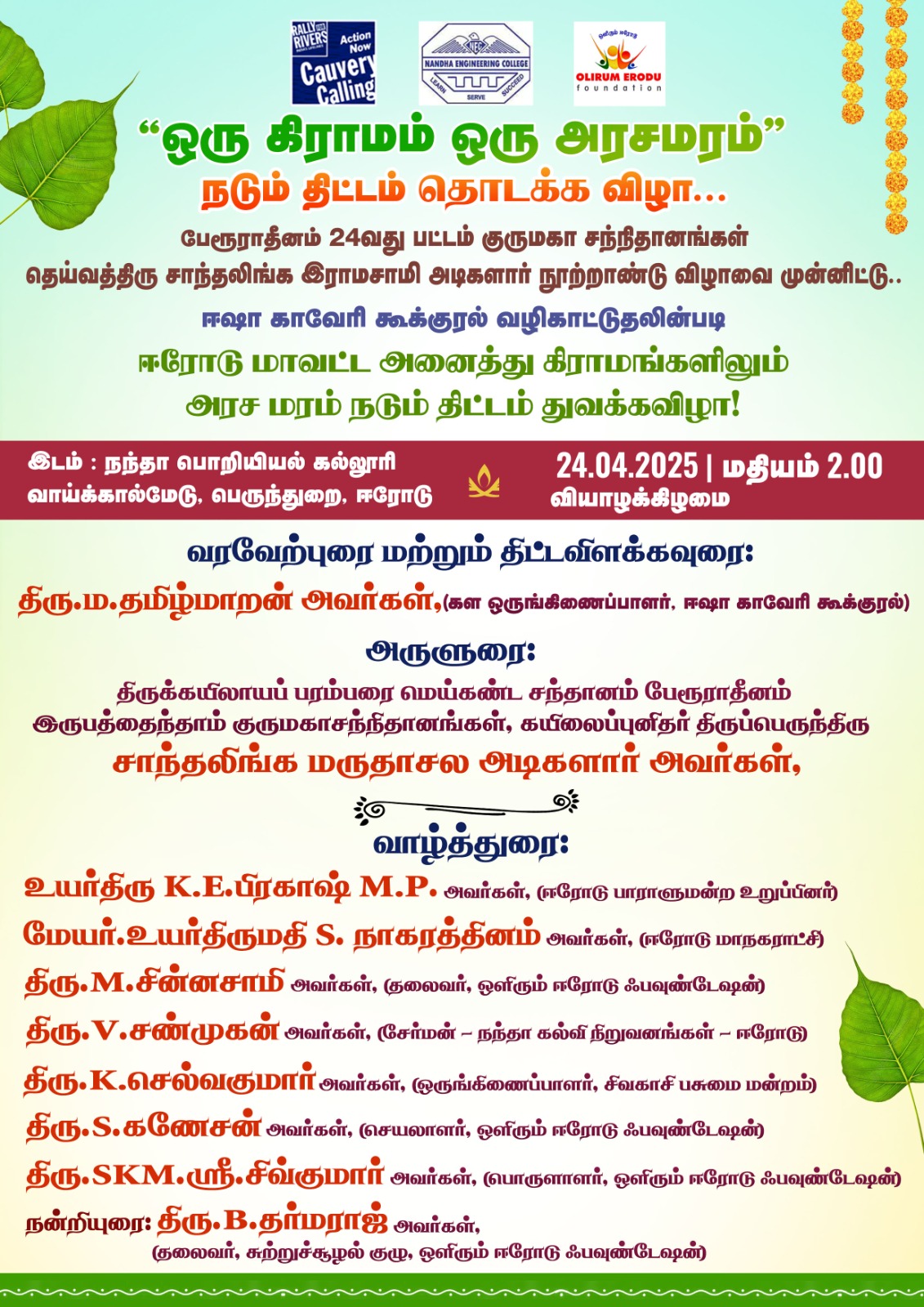
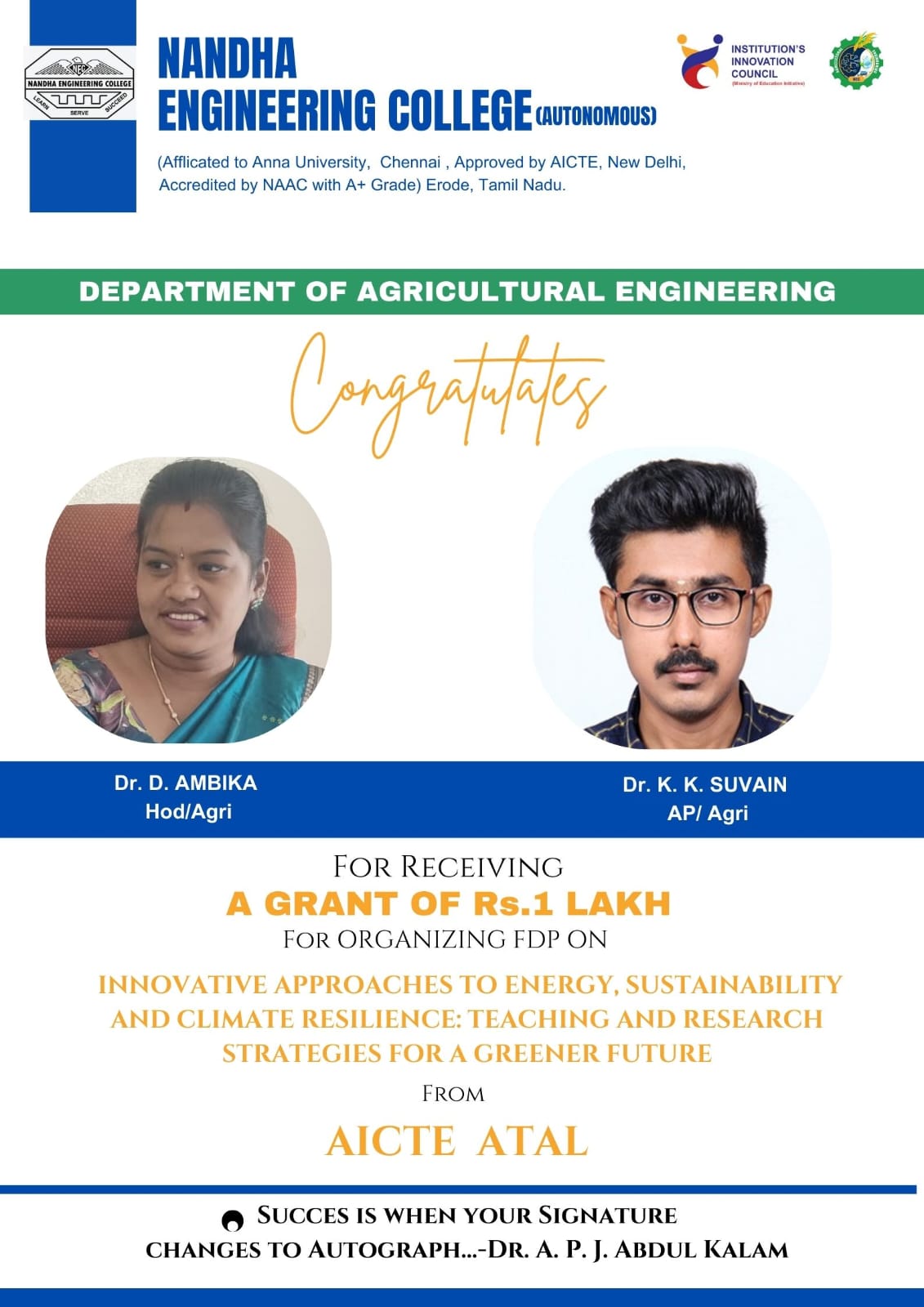
| 1 | AICTE/ATAL/2024 | Dr.D,Ambika & Dr.K.K.Suvain | FDP | Innovative Approaches to Energy, Sustainability and Climate Resilience: Teaching and Research Strategies for a Greener Future | AICTE | 1,00,000.00 | 16.12.24 to 21.12.24 | 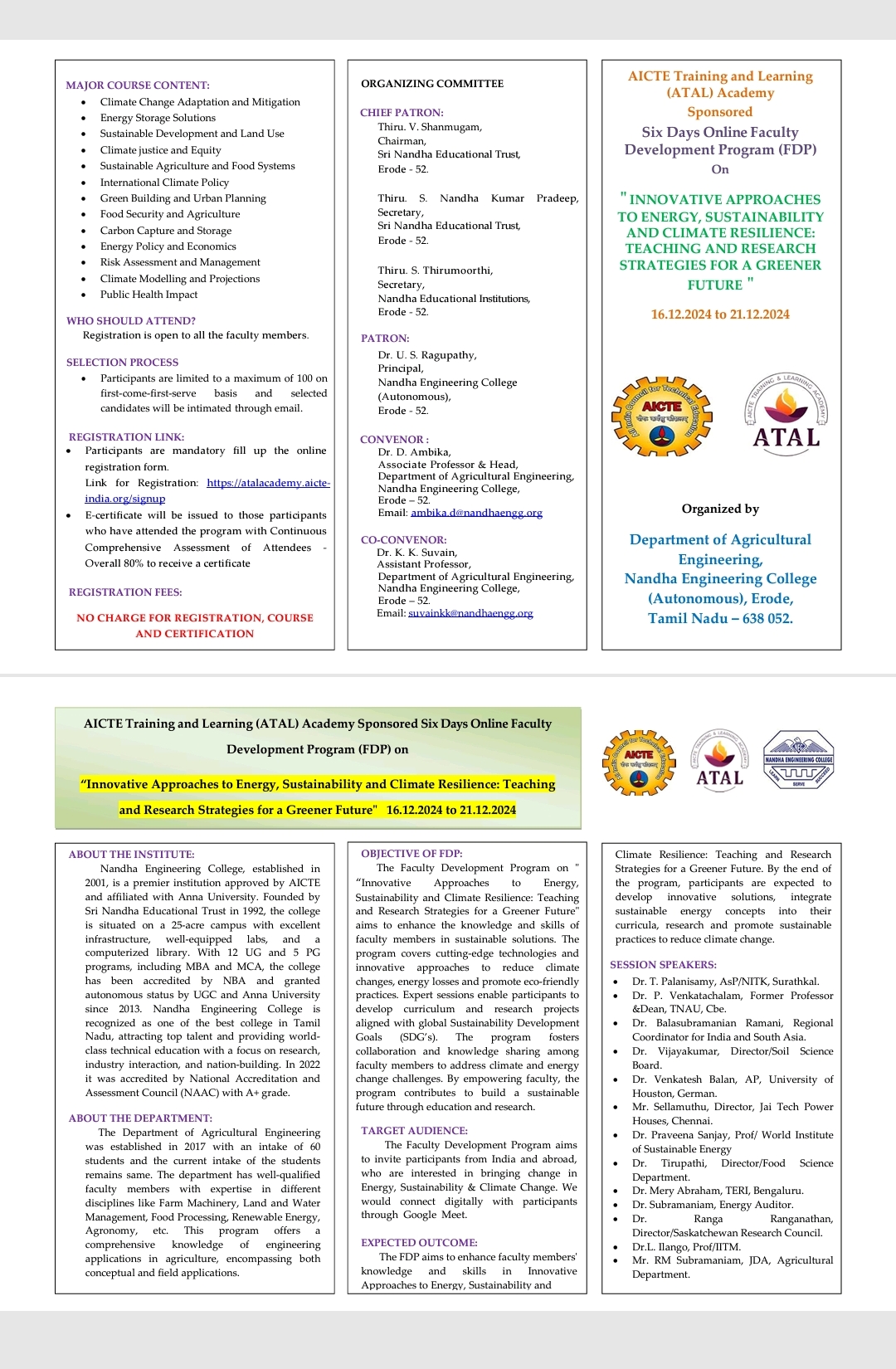 |  |
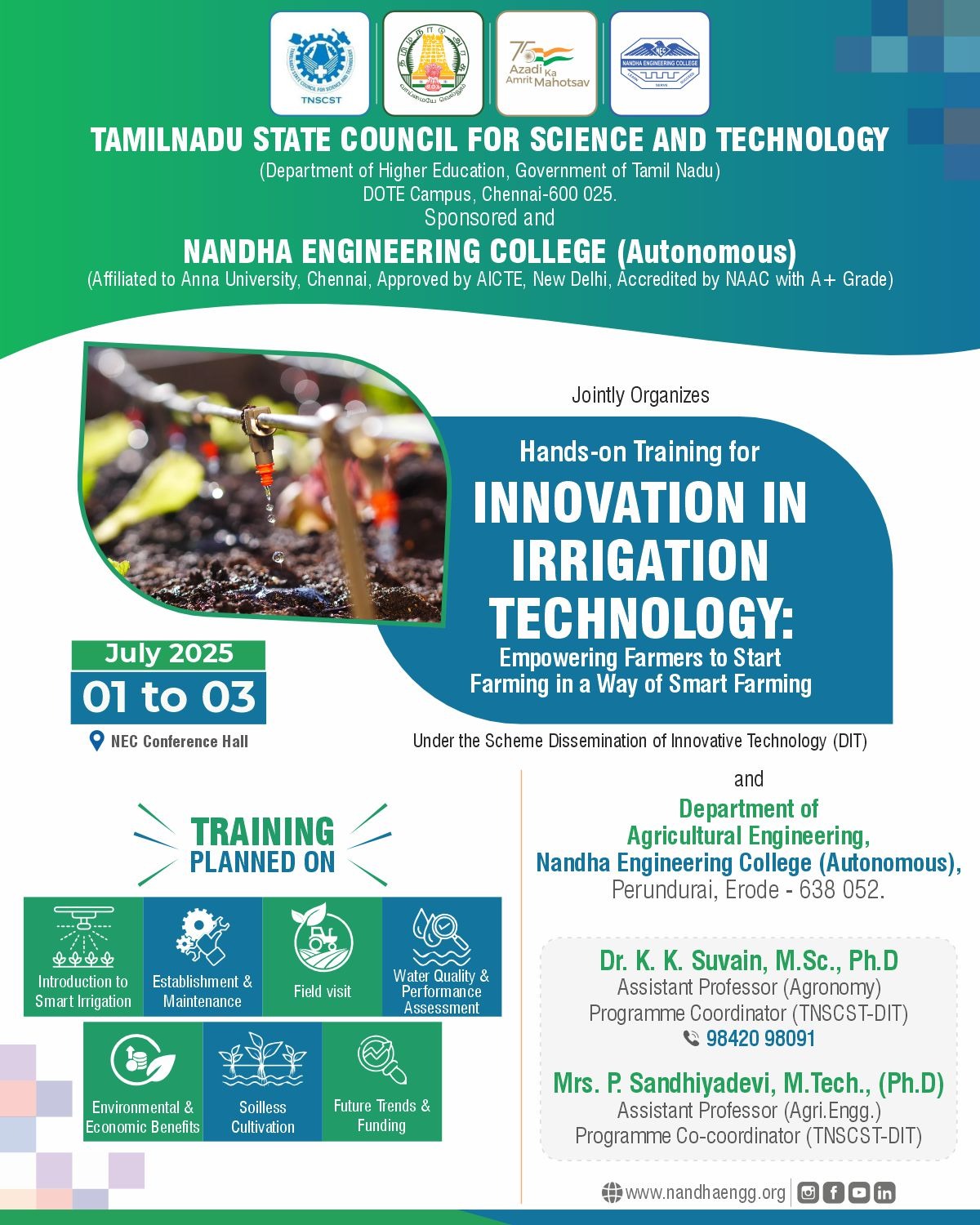
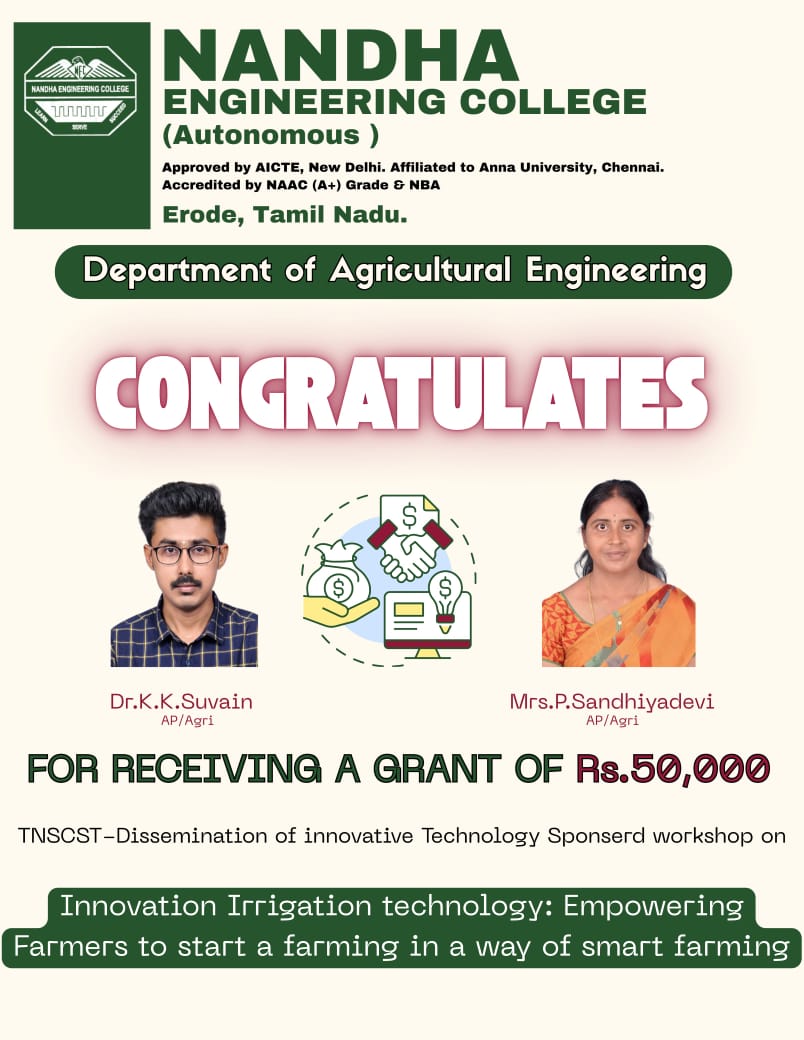
| 2 | TNSCST/DIT/MK/2022-23/02 | Dr. Suvain K. K. & Ms. P. Sandhiyadevi | Workshop | Innovation in Irrigation Technology: Empowering farmers to start farming in a way of smart farming | TNSCST | 50,000/- | Tentatively by May third week | ||

Mr.Palanisamy A
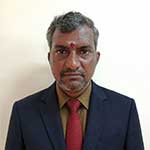
Munusamy M