

The Graduates of Computer Science and Engineering (Cyber Security) will be able to
PEO 1: Core Competency: To transform the graduates as experts in the computing profession and to satisfy the needs of security in the IT industry.
PEO 2: Research, Innovation and Entrepreneurship: To empower the graduates with knowledge in computer systems and professional skills to prevent, investigate and condense attacks in cyberspace.
PEO 3: Ethics, Human values and Life-Long learning: To explore new paths through research and keep abreast with the latest technology in cyber security to curtail the malicious attacks ethically.
PROGRAM OUTCOMES (POs)
PO 1: Engineering knowledge: Apply the knowledge of mathematics, science, engineering fundamentals, and an engineering specialization to the solution of complex engineering problems.
PO 2: Problem analysis: Identify, formulate, review research literature, and analyze complex engineering problems reaching substantiated conclusions using first principles of mathematics, natural sciences, and engineering sciences.
PO 3: Design/development of solutions: Design solutions for complex engineering problems and design system components or processes that meet the specified needs with appropriate consideration for the public health and safety, and the cultural, societal, and environmental considerations.
PO 4: Conduct investigations of complex problems: Use research-based knowledge and research methods including design of experiments, analysis and interpretation of data, and synthesis of the information to provide valid conclusions.
PO 5: Modern tool usage: Create, select, and apply appropriate techniques, resources, and modern engineering and IT tools including prediction and modeling to complex engineering activities with an understanding of the limitations.
PO 6: The engineer and society: Apply reasoning informed by the contextual knowledge to assess societal, health, safety, legal and cultural issues and the consequent responsibilities relevant to the professional engineering practice.
PO 7: Environment and sustainability: Understand the impact of the professional engineering solutions in societal and environmental contexts, and demonstrate the knowledge of, and need for sustainable development.
PO 8: Ethics: Apply ethical principles and commit to professional ethics and responsibilities and norms of the engineering practice.
PO 9: Individual and team work: Function effectively as an individual, and as a member or leader in diverse teams, and in multidisciplinary settings.
PO 10: Communication: Communicate effectively on complex engineering activities with the engineering community and with society at large, such as, being able to comprehend and write effective reports and design documentation, make effective presentations, and give and receive clear instructions.
PO 11: Project management and finance: Demonstrate knowledge and understanding of the engineering and management principles and apply these to one’s own work, as a member and leader in a team, to manage projects and in multidisciplinary environments.
PO 12: Life-long learning: Recognize the need for, and have the preparation and ability to engage in independent and life-long learning in the broadest context of technological change.
The Students of Computer Science and Engineering (Cyber Security) will be able to
PSO 1: Knowledge Proficiency: Equipped with knowledge of security in various platforms, possess computer forensic skills with secured network control and act responsibly in legal, ethical and security related issues.
PSO 2: Recent Technology:Able to apply emerging appropriate technology and programming skills to find optimal solutions for complex problems by applying domain knowledge to transform innovative ideas into reality.

MEMORANDUM OF UNDERSTANDING (MoU)
The Department has signed MoUs with the following companies.
- csuite tech labs, Coimbatore
- Gateway Solutions,Coimbatore
- TechByHeart,Cochin
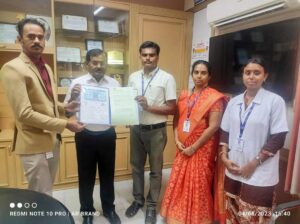
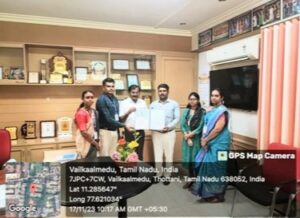
Csuite tech labs Gateway Solutions
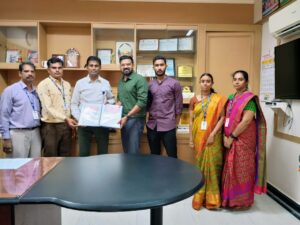
TechByHeart
S.No | Name of the Faculty | Project Title | Funding Agency | Amount |
1 | Dr.S.Prabhu | Billing Software Development and Digital Marketing | PlanetB Family Restaurant | 102,550 |
2 | Dr.S.Prabhu , Ms.S.Krithika | Social Media Handling, SEO Services, and Meta Ads Management | Sarva Sweets | 54,750 |
3 | Mr.M.Santhosh Kumar, Ms.B.Raja Rajeswari | Website Development | Sharief Bhai Biryani | 101,320 |
4 | Ms.A.Priyadharshini | Website Development | Mahith Traders | 51,450 |
5 | Mr.Klothungasuryapandi, Dr.S.K.mahalingam, Dr.S.prabhu | Website for construction Advisory | Tamil Associates | 101,230 |
6 | Ms.L.Nanthini, Mr.P.Sathish | Digital transformation and Automation services | Sri Vaari store | 104,350 |
| S.No | Calender year | Name of the author(s) | Name of the NEC Faculty | Title of paper | Name of journal | Month & Year of publication | ISSN number | Document Type | Type of Indexing |
| 1 | 2025 | Raja M.S.; Ganesh Babu L.; Meinathan S.; Krithika S.; Hussain B.I.; Kumar A.; Kalai Selvi T. | Ms.Krithika S | Real-Time Monitoring of Fatigue-Induced Damage in Stainless Steel through Acoustical Emission and ML Techniques | 4th International Conference on Sentiment Analysis and Deep Learning, ICSADL 2025 – Proceedings | Jan-25 | 10.1109/ICMLAS64557.2025.10968939 | Conference paper | Scopus |
| 2 | 2025 | Dhinesh M.; Geetha B.; Sathish P.; Saravanakumar L.; Jude P.S.V.; Balaram A. | Mr.Sathish P | ImageGuard: Advanced User Authentication via Dynamic Graphical Password Manipulation and Secured Image Sequences | 4th International Conference on Sentiment Analysis and Deep Learning, ICSADL 2025 – Proceedings | Mar-25 | 10.1109/ICSADL65848.2025.10933219 | Conference paper | Scopus |
| 3 | 2025 | Revathy G.; Mary R.A.; Kumar M.S.; Sivakumar G. | Mr.Santhoshkumar M | Deep Learning for Tomato Leaf Disease Detection: A Counting Sort-Enhanced Approach | 2nd International Conference on Machine Learning and Autonomous Systems, ICMLAS 2025 – Proceedings | Mar-25 | 10.1109/ICMLAS64557.2025.10968939 | Conference paper | Scopus |
| 4 | 2025 | Krithika S.; Jayachandran T.; Raghapriya N.R.; Ruba M.; Janani C.; Sathiyavathi S. | Ms.Krithika S | An Effective Denial of Service Texture Features from Malware Grayscale Image | 3rd International Conference on Artificial Intelligence and Machine Learning Applications: Healthcare and Internet of Things, AIMLA 2025 | Jun-25 | 10.1109/AIMLA63829.2025.11041501 | Conference paper | Scopus |
| 5 | 2025 | Velumani J.; Obbayed S.; Kotagi V.; Sathish P.; Karthick P.V. | Mr.Sathish P | Anomaly Detection in Semiconductor Processing using Convolutional Neural Network with Bidirectional Long Short-Term Memory | 3rd International Conference on Data Science and Information System, ICDSIS 2025 | Jul-25 | 10.1109/ICDSIS65355.2025.11071162 | Conference paper | Scopus |
| 6 | 2025 | Alikhan J.S.; Naveenkumar R.; Sharma Y.; Sathish P.; Raja Ch.; Kayalvizhi R. | Mr.Sathish P | SecureVaultChain: A Blockchain-Based Hybrid Model for Comprehensive Threat Mitigation in Network Systems | Proceedings of the 2025 3rd International Conference on Inventive Computing and Informatics, ICICI 2025 | Jul-25 | 10.1109/ICICI65870.2025.11069620 | Conference paper | Scopus |
| 7 | 2025 | B., Narmada, B.; K., Banuroopa, K.; P., Anthony, Priyadharshini; D., Suganthi, D.; A.S., Kumar, A. Sasi; A.V., Deepan Chakravarthi, A. V. | Ms.Priyadharshini A | Enhanced Health Information Management with Blockchain-Assisted FL-CNNs and Autoencoders in the Internet of Medical Things | 2025 International Conference on Advances in Modern Age Technologies for Health and Engineering Science (AMATHE) | Jul-25 | 10.1109/AMATHE65477.2025.11081243 | Conference paper | Scopus |
| 8 | 2025 | K.P., Vaishnavi, Kumar P.; S., Chattopadhyay, Shouvik; S., Kumar, Sanjay; null; B., Krishnasamy, Balasubramanian; R.P., Pujar, Rajlaxmi Pramod | Mr.Santhoshkumar M | A Novel Method for Predicting Consumer Purchase Behaviour on E-Commerce Platforms through Graph Neural Network Model | 2025 International Conference on Intelligent Computing and Knowledge Extraction (ICICKE) | Aug-25 | 10.1109/ICICKE65317.2025.11136707 | Conference paper | Scopus |
| 9 | 2025 | Sreelatha, B.; Rajesh Kumar, A.; Kousar, S.A.; Nanthini, L.; Priya, S.; Lakshmi, A.J. | Ms.Nanthini L | Accurate Fake News Detection in Text-Based Content Using K-Nearest Neighbor, LSTM, MLP and CNN Models | 2025 International Conference on Computing Technologies & Data Communication (ICCTDC) | Sep-25 | 10.1109/ICCTDC64446.2025.11158216 | Conference paper | Scopus |
| 10 | 2025 | Sridevi, M.; Madhava Sarma, P.; Stanly, J.J.; Santhosh, K.M. | Mr.Santhoshkumar M | Deepfakes Unleashed: Exploring the Role of Blockchain in Managing AI- Generated Content | 2025 8th International Conference on Circuit, Power & Computing Technologies (ICCPCT) | Sep-25 | 10.4018/979-8-3373-6481-0.ch010 | Book chapter | Scopus |
| 11 | 2025 | S. Prabhu, P. V. Jothikantham, R. Asha Mary, M. Thirunavukkarasu | Dr.S. Prabhu | AI in Finance: Predictive Analytics for Fraud Detection and Risk Management | Taylor and Francis | Oct-25 | ISBN:9781003543527 | Book chapter | Scopus |
| 12 | 2025 | Nithiya, C.; Revathy, G.; Menaha, R.; S. Prabhu | Dr.Prabhu S | Decentralized Digital Media Generation: A Blockchain-Based Multimodal Generative AI Framework | IGI Global | Oct-25 | 10.4018/979-8-3373-1504-1.ch005 | Book chapter | Scopus |
| 13 | 2025 | Revathy, G.; Jayapratha, T.; Albert Paulin Michael, R.; M.Santhoshkumar | Mr.Santhoshkumar M | Creating Without Limits: Multimodal Generative AI in Digital Media | IGI Global | Oct-25 | 10.4018/979-8-3373-1504-1.ch006 | Book chapter | Scopus |
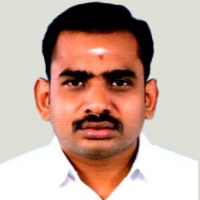
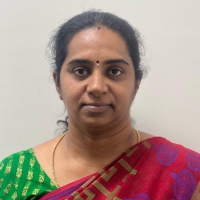
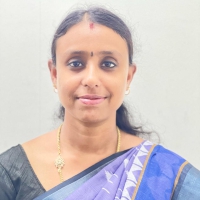
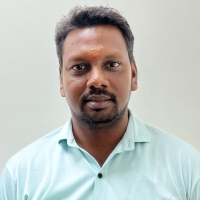
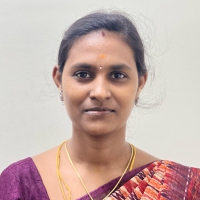
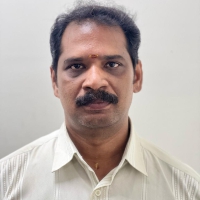
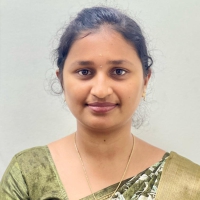

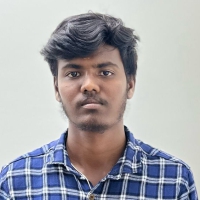
Mr.Gokul S

Mr.Prabhu B